
When the Boston heat hits, the last thing you want is warm air blowing from your air conditioner. If your AC is running but not cooling your home effectively, don’t panic — this is one of the most common issues homeowners face, especially during peak summer months.
Let’s walk through what might be going wrong, how to troubleshoot the problem, and when it’s time to call in a professional.
1. Check the Basics First
Before diving into major repairs, rule out the simple stuff.
Here are quick checks you can do yourself:
- Thermostat settings: Make sure it’s set to “Cool,” not “Fan” or “Heat.” If it’s a programmable thermostat, double-check the schedule.
- Air filter: A dirty filter restricts airflow, forcing your system to work harder while delivering less cool air. Replace it every 1–3 months during the cooling season.
- Circuit breaker: If the outdoor unit lost power while the indoor fan is running, you’ll only feel warm air. Reset the breaker if needed.
🧊 Pro tip: Always start with a fresh air filter — it’s the simplest fix and one of the most common causes of cooling loss.
2. The Outdoor Unit Might Be Blocked
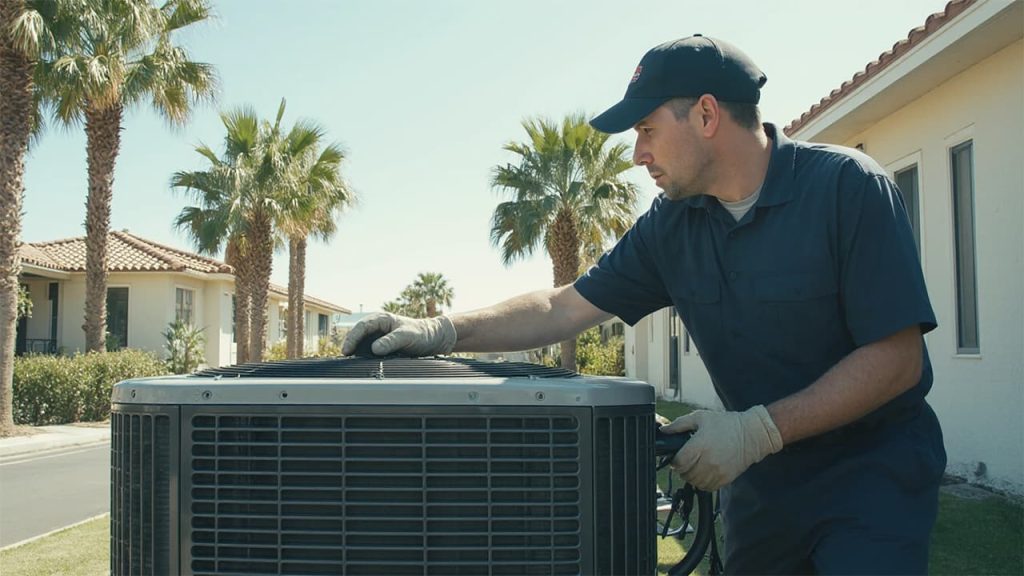
Your condenser unit (the box outside your home) plays a vital role in releasing heat.
If it’s covered in dirt, leaves, or debris, it can’t do its job properly.
How to fix it:
- Turn off power to the AC system.
- Clear leaves, grass clippings, or obstructions around the unit.
- Gently spray the fins with a garden hose (from the inside out).
Avoid using high pressure — it can bend the fins and cause more problems.
3. Low Refrigerant Levels
Refrigerant is the lifeblood of your air conditioning system — it absorbs and releases heat to keep your home cool.
If your system is low on refrigerant, it likely means there’s a leak.
Signs of low refrigerant:
- AC runs constantly but never cools enough
- Ice forming on the refrigerant lines or indoor coil
- Hissing or bubbling noises near the outdoor unit
⚠️ Don’t try to refill refrigerant yourself. It’s a pressurized substance that must be handled by EPA-certified technicians.
A professional will locate and repair the leak, test system pressure, and recharge refrigerant to manufacturer specs.
4. Frozen Evaporator Coil
If your AC has been running nonstop and suddenly stops cooling, the evaporator coil may have frozen.
This happens when airflow is restricted — often from dirty filters, blocked ducts, or low refrigerant.
What to do:
- Turn off the AC immediately to let the ice melt.
- Replace the air filter and make sure vents are open.
- After a few hours, restart the system and check if cooling returns.
If it freezes again, call a technician — there’s likely a deeper airflow or refrigerant issue.
5. Ductwork or Airflow Problems
If some rooms are cool while others stay warm, the issue might not be the AC itself but your ductwork.
Leaky or poorly insulated ducts can waste up to 30% of cooled air, especially in attics or crawlspaces.
Fix options:
- Have your ducts inspected for leaks or disconnected sections.
- Seal gaps with mastic or metal tape — not duct tape.
- Consider professional duct cleaning if you notice heavy dust or mildew.
6. Your AC Might Just Be Undersized (or Old)
If your system has been cooling less effectively each year, age or improper sizing could be to blame.
Older systems lose efficiency, especially if installed 10+ years ago.
When replacement is the smarter move:
- Frequent repairs or refrigerant refills
- High utility bills despite regular maintenance
- Unit struggles during heatwaves
Modern high-efficiency systems (like variable-speed or inverter units) cool faster, quieter, and use far less energy — a major advantage for Boston homeowners.
7. When to Call a Professional
If you’ve checked filters, cleared the condenser, and still aren’t getting cold air, it’s time to call the pros.
AC systems combine electrical, mechanical, and refrigerant components — and improper handling can cause expensive damage.
At AirWise Heating & Cooling, our certified HVAC technicians:
- Diagnose cooling issues quickly and accurately
- Repair leaks, sensors, and electrical faults
- Clean coils and recharge refrigerant safely
- Offer honest advice if your system is nearing the end of its life
Stay Cool with AirWise Heating & Cooling
Don’t let a failing AC ruin your day. Whether it’s a simple repair or a full system tune-up, our team is ready to restore your comfort — fast, professional, and always done right the first time.
📞 Call us today at (617) 999-99-99
or book your quote online →
Do professional HVAC technicians usually include refrigerant leak checks in their standard maintenance visits, or is that something I need to specifically request (and possibly budget extra for) if I suspect low refrigerant?
Most standard HVAC maintenance visits include a basic check of refrigerant levels, but a detailed refrigerant leak check is not always automatically performed. If you suspect low refrigerant or a possible leak, it’s a good idea to specifically request a leak test when scheduling your service. There may be an additional charge for this, so checking with your technician ahead of time can help you budget accordingly.
For a programmable thermostat, what are the most common programming mistakes you see that could prevent the AC from cooling properly, and are there quick ways to check for errors without resetting the whole schedule?
Common programming mistakes include setting the desired temperature too high, scheduling the AC to turn off during hot parts of the day, or accidentally setting the thermostat to ‘heat’ instead of ‘cool.’ To check for errors quickly, review the daily and weekly schedule settings directly on the thermostat screen—look for any unexpected set points or modes. Also, verify the system is set to ‘cool’ and the fan setting matches your comfort needs. You can usually scroll through settings without deleting your entire schedule.
When you mentioned replacing air filters every 1–3 months, is there a noticeable difference in AC performance if you swap them monthly versus every three months? I want to make sure I’m not changing them too often or waiting too long during the summer.
Changing your air filter monthly during heavy AC use, especially in summer, can keep airflow strong and help your system cool more efficiently. Waiting three months might be fine in lighter use or if your home is very clean, but during peak season, a monthly change helps prevent dust buildup and strain on your AC. It’s not usually harmful to change them monthly, and it can improve performance if your filters clog quickly.
If I try resetting the circuit breaker and my AC still only blows warm air, how long should I wait before contacting a professional? Are there other quick fixes I should attempt in the meantime?
If resetting the circuit breaker doesn’t help and your AC continues to blow warm air, you shouldn’t wait more than a few hours before contacting a professional—especially if it’s very hot outside. In the meantime, check that your thermostat is set to ‘cool,’ and replace or clean your air filter if it’s dirty. Also, make sure nothing is blocking your vents. If these steps don’t resolve the issue, it’s best to call for expert help.
If I suspect my system has low refrigerant due to constant running and ice buildup, what are the typical repair costs for finding and fixing a leak plus refilling the system? Just trying to get an idea before calling a professional.
The cost to find and fix a refrigerant leak, plus refilling your AC system, can vary quite a bit. Typically, leak detection and repair might range from $200 to $1,500 depending on the complexity and where the leak is located. Adding refrigerant usually costs $100 to $350 based on the amount needed and the type used. Getting a detailed quote from a professional will give you the most accurate estimate for your specific situation.
How can I tell the difference between a problem with my thermostat settings and an issue with the circuit breaker, since both can make it seem like the AC just isn’t cooling? Any quick tips to narrow it down before calling someone?
To narrow it down, first check your thermostat: make sure it’s set to ‘cool’ and the temperature is lower than the current room temp. Listen for a click or hum when you adjust the setting. If the display is blank or unresponsive, the issue could be with the power supply. Next, check your circuit breaker panel—look for a tripped switch labeled AC or HVAC and reset it if needed. If the AC starts up after resetting the breaker, that points to a power issue rather than a thermostat setting.
I noticed you mentioned gently spraying the outdoor unit fins with a hose to clear debris. Are there certain cleaning products or tools that should be avoided during this process to prevent damage? I don’t want to accidentally make things worse.
You’re right to be cautious. When cleaning your AC’s outdoor unit fins, avoid using pressure washers, wire brushes, or harsh chemicals, as they can easily bend or damage the delicate fins. Stick to using a gentle spray from a garden hose and, if needed, a soft brush. Mild dish soap diluted in water is safe, but specialized coil cleaners are only necessary for heavy buildup.
Is cleaning the outdoor condenser something a typical homeowner can do safely, or are there particular issues that would mean I should just call a pro from the start?
Most homeowners can safely clean the outdoor condenser by turning off the power, removing debris, and gently rinsing the fins with a hose. However, if you notice bent fins, electrical issues, or heavy buildup that won’t come off easily, it’s best to call a professional. Also, if you’re uncomfortable working around electrical components, getting expert help is always a good idea.
If I notice ice forming on the refrigerant lines, as you described, how urgent is this issue? Should I turn off the AC immediately and call a technician, or is there any temporary fix I can do while I wait?
If you see ice forming on the refrigerant lines, it’s best to turn off your AC right away to prevent further damage. Switch the system to ‘fan’ mode (not cooling) to help melt the ice. Avoid running it in cooling mode until a technician inspects it, as ice build-up often points to issues like low refrigerant or restricted airflow.
If the outdoor unit is blocked and you clear it, about how long should it take to notice cooler air inside, assuming everything else is working? Just trying to set realistic expectations for how quickly these fixes can work.
Once you’ve cleared any blockages from the outdoor unit, you should start to feel cooler air from the vents within about 10 to 30 minutes, as long as the rest of the system is functioning properly. It may take a bit longer for the entire space to reach your set temperature, depending on room size and how hot it was before. If you don’t notice a change within an hour, there may be another issue with your AC.
How quickly do problems like low refrigerant levels escalate? For a small retail shop, can I wait a few days before calling in a repair, or does it risk damaging the whole system if I delay?
Low refrigerant levels can lead to bigger issues if left unresolved. Running your AC with low refrigerant puts extra strain on the compressor, increasing the risk of costly damage. In a small retail shop, it’s best not to delay—calling for repair within a day or two helps prevent further harm and keeps your shop comfortable for customers and staff.
When cleaning the condenser unit outside, is it safe to use a garden hose if I don’t know how to turn off the power, or should I call someone for that part? Also, how often should I check for debris around it during the summer?
It’s best not to use a garden hose on your outdoor condenser unit if you’re unsure how to turn off the power, as water and electricity can be a dangerous mix. For safety, consider calling a professional to help with cleaning. Ideally, check for debris like leaves and grass clippings around the unit every couple of weeks during summer, especially after storms.
How often do most homeowners actually need to replace their air filters during the summer? You mentioned every 1 to 3 months, but are there signs to watch for that mean it needs to be swapped out sooner?
During the summer, many homeowners find that replacing air filters every 1 to 3 months works well, but you might need to change them more often if you notice signs like reduced airflow, more dust around your vents, or if the filter looks dirty or clogged when you check it. Households with pets or allergies often need to swap filters sooner, so a quick visual check every few weeks is a good idea.
When cleaning the outdoor condenser unit, is it okay to use a regular hose if I don’t have access to the inside of the fins, or should I call a professional to do a deeper clean? I want to avoid causing any damage but also try fixing it myself first.
Using a regular garden hose with gentle water pressure is generally safe for cleaning the exterior of the condenser fins. Just avoid using a pressure washer, as it can bend or damage the fins. Spray from the outside in, and stay perpendicular to the fins. If you can’t reach debris inside or if the fins are heavily clogged, it’s best to call a professional for a deeper clean.
You mention replacing the air filter every 1–3 months during the cooling season. If I have pets or allergies, should I be changing it more frequently to prevent AC problems, or is that timeframe usually fine?
If you have pets or allergies, it’s a good idea to check your air filter more frequently—every month is often better. Pet hair and dander can clog filters faster, and allergies can be aggravated by a dirty filter. If the filter looks dirty before the 1-month mark, replace it to keep your AC running efficiently and maintain better air quality.
Are there preventative steps I can take as a business owner to avoid common AC problems in peak season, beyond just replacing filters, so I don’t end up with costly repairs or sudden breakdowns?
Absolutely, as a business owner, you can take several preventative steps. Schedule professional maintenance at least twice a year to catch issues early. Keep outdoor units clear of debris and ensure indoor vents aren’t blocked. Regularly check refrigerant levels and thermostat settings. Encourage staff to report any unusual noises or performance drops. These steps help minimize the risk of major breakdowns during peak season.
When cleaning the outdoor condenser unit with a hose as you suggest, is it safe to remove the fan cover for better access, or should that only be done by a pro? I worry about damaging something while trying to clear out all the debris.
It’s best to leave removing the fan cover to a professional. Cleaning the condenser fins with a hose from the outside is safe, but taking off the fan cover risks damaging delicate wiring or components inside. If you notice heavy debris inside the unit that you can’t reach, consider calling a technician for a thorough cleaning.
I noticed you advise gently spraying the condenser fins with a hose, but what if I accidentally bent a few fins? Is that something I can fix myself, or should I call a professional right away?
If you accidentally bent some condenser fins, it’s often something you can handle yourself. You can use a simple fin comb, available at most hardware stores, to carefully straighten the fins. Just be gentle to avoid causing more damage. However, if a large area is bent or you notice any other issues, it’s best to call a professional for help.
You mention clearing debris and gently spraying the condenser fins. Is there a specific type of garden hose nozzle that works best, and should I wait for the fins to dry completely before turning the system back on?
When spraying the condenser fins, use a garden hose with a spray nozzle set to a gentle setting, such as ‘shower’ or ‘mist.’ Avoid high-pressure settings, which can bend the fins. You don’t need to wait for the fins to dry completely before turning the system back on—just ensure there’s no standing water around any electrical components.
When it comes to clearing obstructions from around the outdoor unit, how far should the area be cleared? Do I need to trim back bushes a couple feet away, or just clear what’s directly touching?
For best performance, it’s recommended to keep at least 2–3 feet of clear space around your outdoor AC unit. This means you should trim back bushes, plants, and remove any objects within that distance, not just what’s directly touching the unit. This helps ensure proper airflow and more efficient cooling.
I noticed my AC runs almost nonstop lately, but it doesn’t feel that much cooler inside. If I suspect low refrigerant, about how expensive and urgent is that kind of fix compared to replacing a dirty filter or clearing the condenser?
Low refrigerant is a more serious and urgent issue than a dirty filter or a blocked condenser. Topping up or repairing refrigerant leaks usually costs more—often a few hundred dollars or more, depending on the severity. In contrast, replacing a filter or cleaning the condenser is much cheaper and often a simple DIY job. If you suspect low refrigerant, it’s best to call a professional soon, as running the AC with low refrigerant can damage the system.
When cleaning the outdoor condenser, how can I tell if I’ve removed enough debris for it to work properly? Is there a way to check airflow or performance myself before calling someone?
After cleaning your outdoor condenser, check that you can clearly see the metal fins and there’s no obvious dirt, leaves, or grass clinging to them. To test airflow, hold your hand a few inches above the unit while it’s running—you should feel warm air blowing out steadily. If your AC seems to be cooling noticeably better and airflow feels strong, you’ve likely done enough. However, if airflow is weak or cooling issues persist, it might be time for a professional check.
How quickly should I expect my AC to start cooling again after resetting the circuit breaker if the outdoor unit lost power, or are there additional steps I should take if cool air doesn’t return right away?
After resetting the circuit breaker, your AC should begin cooling again within 10 to 15 minutes if the issue was solely a power interruption. If cool air doesn’t return quickly, check that the thermostat is set correctly and that the outdoor unit’s fan is running. Also, inspect your air filter and vents for blockages. If the problem persists, the issue could be more serious and may require a professional technician.
How do I know if I can safely clean the condenser fins myself, or should I always hire someone to do it to avoid damaging the unit? My setup is fairly standard for a suburban home.
If your AC’s condenser unit is easily accessible and you feel comfortable working around basic outdoor equipment, you can usually clean the fins yourself using gentle methods like a soft brush or a garden hose (not a pressure washer). Just be sure to turn off the power first and avoid bending the fins. If the fins already look damaged or you’re unsure, it’s safer to call a professional.
For people who live in older homes where the breaker trips sometimes, how often does a tripped circuit breaker actually turn out to be the cause of AC cooling issues versus something more serious like a refrigerant leak?
In older homes, a tripped circuit breaker is a common reason an AC stops cooling, especially during periods of high demand or if the wiring is outdated. However, while it’s often the culprit, more serious issues like refrigerant leaks are also possible and usually become likely if the breaker trips repeatedly. If flipping the breaker fixes things temporarily but the problem returns, it’s a sign to investigate further or consult a technician.
I noticed my AC circuit breaker tripped recently, but everything else in the house works fine. Is it safe to simply reset it, or does that point to a more serious electrical issue with the air conditioner?
If your AC’s circuit breaker tripped while the rest of your house is unaffected, it usually means the AC drew more power than the breaker allows, possibly due to a temporary overload. You can try resetting it once, but if it trips again, avoid repeated resets. This could indicate a more serious problem with your AC, such as a failing component or electrical fault, and it’s best to call a professional for inspection.
If cleaning the outdoor condenser unit doesn’t seem to help, are there any easy ways for a renter to tell if the issue might actually be with the refrigerant levels before calling a professional?
If cleaning the outdoor condenser unit hasn’t improved cooling, checking the refrigerant level yourself as a renter is tricky, since it requires special tools. However, you can look for signs like ice forming on the refrigerant lines or the outside unit, or hear hissing noises near the unit, which might suggest a refrigerant issue. If you notice these signs, it’s best to notify your landlord or call a professional, as handling refrigerant isn’t safe without proper training.
If replacing the air filter and checking the thermostat doesn’t help, how can I tell whether the issue is more likely a blocked condenser or low refrigerant? Are there any specific signs that clearly point to one over the other before calling a pro?
If your AC still isn’t cooling after basic checks, look for these signs: A blocked condenser often causes the outdoor unit to feel hot, and you might notice reduced airflow or the fan running loudly. Low refrigerant usually leads to weak cooling plus ice buildup on the indoor or outdoor coils and a hissing or bubbling noise. Noticing these can help you narrow down the issue before calling for professional help.
If after replacing the air filter and checking the circuit breaker my AC still isn’t cooling, how can I tell if the problem is with the thermostat itself or something more serious like low refrigerant?
If your AC still isn’t cooling after basic checks, try setting the thermostat to a much lower temperature to see if the unit turns on. If nothing happens or the display is blank, the thermostat might be faulty. However, if the system runs but only blows warm air, low refrigerant could be the issue. For refrigerant problems, a technician is needed to check levels and look for leaks.
Does clearing debris from around the condenser actually make a noticeable difference in cooling efficiency, or is that more of a long-term maintenance task? I’m wondering how quickly I can expect to see results after doing this.
Clearing debris from around the condenser can have an immediate positive impact on your AC’s cooling efficiency. When airflow is blocked, the system works harder and cools less effectively. Once the area is cleared, you might notice your AC cooling better within a few hours, especially on hot days. While it’s also a good long-term habit, the benefits can show up right away.
When you mention spraying the outdoor condenser fins with a garden hose, is it safe for someone to do that without any special tools, or should I be concerned about potentially damaging something if I spray from the wrong angle?
Spraying your outdoor condenser fins with a gentle stream from a garden hose is safe for most people, as long as you avoid using high pressure or a nozzle that creates a strong jet. Always spray from the top down at a slight angle, not straight on or upwards, to prevent bending the fins or forcing water into electrical components. No special tools are required, just a bit of caution and a gentle touch.
For cleaning the outdoor condenser unit, you said to spray the fins gently with a garden hose. Is there a specific type of nozzle or water pressure I should stick to so I don’t accidentally bend the fins?
Use a garden hose with a standard spray nozzle set to a gentle setting, like ‘shower’ or ‘mist.’ Avoid any high-pressure or jet settings, as these can easily bend the delicate fins. Hold the nozzle a few feet away from the fins and spray at a slight angle. This approach should remove dirt without damaging the unit.
You recommend gently washing the outdoor unit’s fins with a garden hose. Is there a particular type of cleaner or tool I should use to avoid damaging them, or is plain water enough? Also, how often should this cleaning be done during the summer?
Plain water from a gentle garden hose spray is usually enough to clean the outdoor unit’s fins safely. Avoid using high-pressure nozzles, harsh chemicals, or stiff brushes, as they can bend or damage the fins. If you want to use a cleaner, choose one specifically labeled for AC coils. Cleaning once at the start of summer and again halfway through the season is a good routine, especially if you notice dirt or debris building up.
If I’ve already changed my air filter and double-checked the thermostat settings but my AC is still blowing warm air, is it safe to clean the outdoor condenser unit myself, or should I call a professional right away?
If you’re comfortable working outside and can safely access the unit, you can gently clean the outdoor condenser yourself by turning off the power and rinsing the fins with a garden hose (use low pressure). Remove any visible debris around the unit. However, if you notice any damage, strange noises, or aren’t sure how to proceed, it’s best to call a professional to avoid risk of injury or causing further issues.
You mention resetting the breaker if needed, but if my indoor fan runs and the outdoor unit seems dead, should I be looking at electrical issues, or is it more likely related to the thermostat or another AC component?
If your indoor fan works but the outdoor unit is completely unresponsive, electrical issues could be the culprit. It might be a tripped breaker, a blown fuse, or a problem with the outdoor disconnect box. However, it could also stem from a failed contactor or capacitor in the outdoor unit. A thermostat problem is less likely if the fan operates, but double-check the settings just in case. If basic resets don’t help, it’s best to call a professional to safely diagnose the issue.
If cleaning the outside unit and replacing the filter don’t solve the issue, how quickly should I expect a professional to diagnose and fix a refrigerant leak, and is this typically a same-day repair in your experience?
If you suspect a refrigerant leak, a professional can usually diagnose the problem within an hour of arrival. However, whether it’s a same-day repair depends on the severity of the leak and if replacement parts are needed. Small leaks can sometimes be fixed on the spot, but larger leaks or hard-to-access areas might require a follow-up visit. It’s best to ask the technician about timing once they assess your specific situation.
You mentioned cleaning the outdoor condenser unit with a garden hose, but I’m worried about damaging it. How gentle do I really need to be, and should I use any cleaning products, or just water?
You’re right to be cautious. Use a gentle spray with your garden hose—avoid using high pressure, as it might bend the fins. You don’t need any cleaning products; plain water is safest and effective for rinsing away debris. If there’s stubborn dirt, a soft brush can help, but always be gentle to avoid damaging the unit.
If my AC has ice buildup on the refrigeration lines like you described, is there a way to temporarily improve cooling until a technician arrives, or should I shut it down completely?
If you notice ice buildup on your AC’s refrigeration lines, it’s best to turn the unit off completely and let the ice melt. Running it further can damage the compressor. You can switch the fan setting to ‘On’ (with the cooling off) to help melt the ice faster, but avoid running the cooling cycle until a technician has checked the system.
I run a small coffee shop and noticed our AC isn’t keeping up on the hottest days, even though I just replaced the air filter. The article mentions cleaning the outdoor unit—how often should that be done for businesses in a busy area with lots of dust and foot traffic?
In a busy area with lots of dust and foot traffic, it’s a good idea to clean your outdoor AC unit at least once a month. Dust, debris, and even coffee shop residue can quickly build up and restrict airflow. Regular monthly cleaning helps your AC run efficiently, especially during peak summer days. If you notice buildup sooner, cleaning more frequently can also help.
If I notice that my outdoor condenser unit keeps accumulating leaves and debris even after cleaning, is there a recommended way to shield it without restricting airflow? Would a cover or barrier help or cause more issues?
You can use a screen or lattice barrier placed a few feet away from the condenser unit to help block leaves and debris without restricting airflow. Avoid using fitted covers while the unit is running, as these can trap heat and moisture. Make sure any barrier allows plenty of space on all sides for proper ventilation and easy access for maintenance.
Could you clarify how often the outdoor unit should be cleaned during peak summer months in a city like Boston? I want to avoid overdoing it or missing critical times during heat waves.
In Boston’s peak summer months, it’s generally recommended to clean your outdoor AC unit about once a month. This helps remove pollen, dust, and city debris that can build up quickly in urban environments. However, if there’s a major heat wave or noticeable drop in cooling efficiency, checking and clearing the unit more frequently—every two weeks—can be beneficial. Just ensure power is off before cleaning.
Could a dirty filter or blocked condenser actually increase my electric bill, and are there any preventive steps I can take to help my AC run more efficiently during our busiest summer months?
Yes, both a dirty filter and a blocked condenser can cause your AC to work harder, leading to higher electric bills. To help your AC run efficiently during the summer, check and replace or clean your air filter monthly, and keep the outdoor condenser unit clear of debris like leaves and grass. Scheduling regular professional maintenance can also prevent bigger issues and keep your energy costs down.
If my AC keeps running but never fully cools the house, and I’ve changed the air filter and checked the thermostat like you suggested, do I absolutely need a pro to check for low refrigerant, or are there any DIY steps I could safely try first?
If the air filter and thermostat are fine but your AC still isn’t cooling, most other causes—like low refrigerant—usually require a professional. Refrigerant issues involve handling chemicals and special tools, which aren’t safe for DIY. However, you can check if the outdoor unit is clean and clear of debris, make sure all vents are open and unblocked, and confirm windows and doors are closed. If these basic checks don’t help, it’s time to call a pro.
How long should it typically take for an AC to start cooling again after replacing a dirty air filter and resetting the breaker, or should I expect to see results immediately?
After replacing a dirty air filter and resetting the breaker, you should notice cooler air coming from your AC within 10 to 15 minutes if those were the main issues. However, it may take up to an hour for your space to reach the desired temperature, depending on its size and how hot it was to start with.
Can replacing the air filter myself every 1–3 months really make a noticeable difference in cooling performance, or would neglected maintenance elsewhere have a bigger impact if my system still isn’t working well?
Replacing your air filter regularly can absolutely make a noticeable difference because a clogged filter restricts airflow, making your AC less effective. However, if your system still isn’t cooling properly after changing the filter, other maintenance issues—like dirty coils, low refrigerant, or thermostat problems—could have a bigger impact. It’s wise to start with the filter but check other areas if performance doesn’t improve.
In terms of cost, what are the typical price ranges for having a technician recharge refrigerant and fix a potential leak? I want to get an idea of what to budget if this turns out to be my AC’s problem.
If your AC needs a refrigerant recharge and leak repair, costs can vary. A basic refrigerant recharge is usually between $150 and $400, depending on the type and amount needed. Repairing a leak can range from $200 to $1,500, depending on the severity and location of the leak. It’s a good idea to ask for an estimate from a few local technicians to get a more accurate idea for your situation.
I just changed my air filter and made sure my thermostat is set right, but my AC is still blowing warm air. Is it risky to spray off the outdoor condenser unit if I’m not sure about turning off the power?
Spraying off your outdoor condenser unit can help, but it’s important to do it safely. If you’re unsure how to turn off the power, it’s best not to proceed, as there’s a risk of electric shock or damaging the unit. Consider having a professional handle the cleaning, or consult your unit’s manual for safe shut-off instructions before attempting it yourself.
You mentioned resetting the circuit breaker if the outdoor unit lost power. Is there a way to know for sure if that’s actually the issue before calling someone out, or could the problem be electrical inside the unit itself?
If your outdoor AC unit isn’t running, first check your electrical panel to see if the breaker for the AC has tripped. Flip it off and back on to reset it. If the unit still doesn’t start, listen for any buzzing or clicking noises—these could signal an internal electrical issue. If resetting the breaker doesn’t solve it and there’s no obvious power, it’s best to call a professional to safely diagnose the problem.
After cleaning my outdoor condenser and changing the filter, how long should I wait to see if my AC’s cooling improves before calling a professional? Is there a usual timeframe?
You should typically notice some improvement in cooling within a few hours after cleaning the outdoor condenser and replacing the filter, especially if those were the main issues. Allow your AC to run for 2 to 4 hours and monitor the temperature indoors. If you don’t notice any significant cooling by then, or if the problem persists, it’s a good idea to contact a professional for further diagnosis.
If the condenser unit is pretty clogged up with leaves and you give it a cleaning like you suggest, about how quickly should you expect your AC to start cooling better? Or does it sometimes take a while for the performance to improve?
After cleaning a clogged condenser unit, you should notice improved cooling performance fairly quickly—often within an hour or so of turning the AC back on. The airflow through the coils is restored immediately, allowing the system to release heat more efficiently. If you don’t see any improvement after cleaning, there may be another issue that needs attention.
For a small business like mine with multiple rooms, would you recommend replacing the air filter more often than every month during heavy usage, or is that interval usually enough?
For a small business with several rooms and heavy AC usage, you might benefit from checking and potentially replacing your air filters every 2–3 weeks rather than waiting a full month. High foot traffic and frequent use can cause filters to clog faster, which impacts cooling and air quality. Monitoring the filters regularly will help you decide if more frequent changes are necessary for your specific environment.
For a small business on a tight budget, are there DIY steps I can try beyond what you listed before we have to call in a technician, especially if the issue might involve low refrigerant?
If you suspect low refrigerant is the problem, that’s usually not safe or legal to handle yourself, since it requires special tools and certification. However, you can double-check all filters, vents, and coils for dust or blockages, make sure your thermostat is working and set correctly, and look for obvious signs of leaks like oily spots around connections. These are safe DIY steps that might help, but for refrigerant issues, a technician is needed.
If my AC fan is running but the air isn’t cool, should I try resetting the circuit breaker right away, or is it better to check something else first, like the thermostat or air filter?
If your AC fan is running but the air isn’t cool, it’s a good idea to first check the thermostat to ensure it’s set to ‘cool’ and at the desired temperature. Next, inspect the air filter, as a clogged filter can restrict airflow and reduce cooling. Try resetting the circuit breaker only if those basic checks don’t reveal the issue.
You mentioned replacing air filters every 1–3 months, but during a Boston summer with pets in the house, would you suggest sticking to monthly changes, or can it really go longer if the house seems clean?
With pets in the house during a humid Boston summer, it’s best to replace your AC filters every month, even if your home looks clean. Pet hair and dander accumulate quickly and can clog filters faster than you might expect, reducing your AC’s efficiency. Regular monthly changes will help maintain good air quality and keep your system running smoothly.
I noticed my AC is running constantly but the house isn’t getting cool, and I’m hearing some hissing from outside. Is this always a refrigerant leak, or are there other possible causes?
Hissing noises from your outdoor AC unit often point to a refrigerant leak, but that’s not the only possible cause. It could also be an issue with the compressor, a leaking valve, or even high pressure in the system. Continuous running and poor cooling usually mean something isn’t working right. It’s best to turn off your system and have a professional inspect it to avoid further damage.
When cleaning the fins on the outdoor unit, is it safe to use just a regular garden hose on low pressure, or do I need any special attachment or cleaning solution for best results?
Using a regular garden hose on low pressure is usually safe and effective for cleaning the fins on your outdoor AC unit. Avoid using a pressure washer, as it can bend or damage the fins. If you want a deeper clean, you can use a coil cleaning spray made for air conditioners, but it’s not strictly necessary for routine maintenance.
About how much might it cost if I end up needing a pro for low refrigerant levels or a leak? Trying to figure out whether it’s worth trying everything myself first or just calling someone in right away.
If you need a professional for low refrigerant or a leak, the cost usually ranges from $200 to $1,500. Simple refills are on the lower end, but finding and repairing leaks can add significant labor and parts costs. If your AC is older or you suspect a major leak, it may be more cost-effective to call a pro early rather than spend time and money troubleshooting yourself.
How can I tell the difference between an issue with my thermostat settings and a deeper mechanical problem with the AC unit itself? Are there any signs that make it clear it’s not just a basic fix?
If your thermostat is set correctly but your AC still isn’t cooling, try adjusting the temperature and listen for the system to respond. If nothing happens or you notice unusual noises, weak airflow, or warm air, it’s likely a mechanical problem. Issues like ice on the coils, frequent cycling, or leaks also suggest something more serious than a simple thermostat setting.
For the outdoor condenser cleaning step, is it safe to remove the top grill to get better access to the fins, or should I just spray from the sides? I want to make sure I don’t mess anything up while clearing out the debris.
It’s usually best to clean the condenser fins by spraying gently from the sides, as removing the top grill can risk damaging internal components or wiring, especially the fan. If you do need to remove the top, always disconnect power first and lift straight up to avoid disturbing the fan blades or wires. For most routine cleaning, side access is safer and effective.
How often do you recommend checking the outdoor condenser for leaves and debris? I live in a pretty leafy area and worry it might get blocked quickly during the summer.
In a leafy area, it’s a good idea to check your outdoor condenser for leaves and debris at least once every two weeks during the summer. If you notice a lot of tree shedding, you might want to inspect it weekly. Keeping it clear helps your AC work efficiently and prevents cooling problems.
For someone on a tight budget, which of these troubleshooting steps should be prioritized to avoid an expensive repair visit during a heatwave?
If you’re on a tight budget, start by checking and cleaning or replacing your AC’s air filter—this is often the most common and affordable fix. Next, clear any debris around the outdoor unit and make sure vents inside your home aren’t blocked by furniture. These steps can often restore cooling without needing a professional.
After clearing dirt and leaves around my outdoor unit as you suggested, how long should I expect to wait before feeling cooler air inside the house?
Once you’ve cleared dirt and leaves around your outdoor AC unit, you should notice cooler air indoors within 30 minutes to an hour if the blockage was the main issue. Make sure all vents are open and your thermostat is set correctly. If there’s no improvement after an hour, there may be another problem that needs attention.
For cleaning the outdoor condenser, you said to gently spray it with a hose from the inside out. How do I safely access the inside if the unit is close to my house and not easily reached all around?
If the outdoor condenser is close to your house and hard to reach all sides, you can still clean it by removing the top grille or fan (after turning off the power). This lets you carefully spray water from inside the unit outward through the fins. Take care not to bend the fins, and if it’s too tight or difficult, it may be best to use a soft brush or call a professional for a thorough cleaning.
If I live in an apartment building and my outdoor AC unit is on a shared rooftop, are there any special considerations or restrictions when it comes to accessing and cleaning around the condenser unit as suggested here?
Yes, when your condenser unit is on a shared rooftop, you may need permission from your building management or landlord before accessing it. There could be safety protocols or specific times when rooftop access is allowed. Also, some buildings require maintenance to be handled by approved professionals rather than tenants. Always check your lease agreement and building rules before attempting any cleaning or maintenance yourself.
In case the issue turns out to be low refrigerant, is fixing a leak and refilling the refrigerant something that’s covered by a home warranty or does it typically get pretty expensive out of pocket?
Whether low refrigerant and leak repairs are covered depends on your specific home warranty policy. Many home warranties do include some coverage for AC refrigerant and related repairs, but there are often limits, exclusions, or service fees involved. Out-of-pocket costs without coverage can be expensive, ranging from a few hundred to over a thousand dollars, depending on the leak and refrigerant type. It’s best to review your warranty documents or contact your provider to confirm what’s included.
How much should I expect to pay if it turns out my AC needs more refrigerant, and does insurance usually cover that kind of repair? I’m worried about getting hit with a big bill right in the middle of summer.
If your AC needs more refrigerant, the cost can range from $150 to $400 depending on the type of refrigerant and the amount required. Many standard homeowners’ insurance policies don’t cover refrigerant refills or AC wear and tear, but check your policy to be sure. Some home warranty plans may offer coverage, so it can help to review your plan or contact your provider.
How can I tell if the ice I see on my refrigerant lines is a sign of a serious leak, or just something that happens if the AC is running extra hard during a heatwave?
Seeing ice on your refrigerant lines usually indicates a problem, not just your AC working hard. It can be caused by restricted airflow, low refrigerant, or a serious leak. If the ice doesn’t melt after turning the system off for a while and changing the air filter, or if cooling performance hasn’t improved, it’s best to contact a professional—especially since refrigerant leaks can harm your system and reduce efficiency.
If replacing the air filter and cleaning the outdoor unit don’t seem to help, how can I tell whether the issue is definitely low refrigerant versus something electrical with the system?
If your AC still isn’t cooling after basic maintenance, low refrigerant usually causes symptoms like ice on the refrigerant lines or the indoor coil and a hissing sound. Electrical issues, on the other hand, often cause the fan or compressor not to start, or the system may cycle on and off irregularly. For either issue, it’s safest to have a professional technician diagnose the problem since both require specialized tools and knowledge.
If my circuit breaker keeps tripping after I reset it for the AC, could that point to a bigger issue? Should I try resetting it more than once, or is it time to call a professional right away?
If your circuit breaker keeps tripping after you reset it, it’s a sign of a deeper electrical or AC system problem. It’s best not to keep resetting it, as this could be unsafe. Instead, call a professional right away to diagnose and fix the issue to prevent further damage or safety risks.
For programmable thermostats, are there any particular scheduling mistakes that commonly lead to ACs not cooling properly, and how can those be avoided?
Yes, common scheduling mistakes with programmable thermostats include setting the temperature too high during occupied hours or not allowing enough time for the AC to cool before you arrive home. To avoid these issues, double-check your schedule settings and make gradual temperature changes. Ensure your ‘wake’ or ‘return’ periods start 30–60 minutes before you need the space cooled, and review the schedule seasonally for accuracy.
What should I look for to know if my programmable thermostat has the wrong schedule set? The advice about checking for ‘Cool’ mode helps, but I find the programming options confusing.
To check if your programmable thermostat has the wrong schedule, look at the set times and temperatures for each part of the day (morning, afternoon, evening, and night). Make sure the cooling temperature is set lower than the current room temperature during times when you want the AC running. If the times or temperatures don’t match your routine, adjust them accordingly. Most thermostats let you view and change schedules by navigating to ‘Program’ or ‘Schedule’ in the menu.
Can you explain how often it’s necessary to clear debris from around the outdoor unit? We have trees and grass nearby, and I’m wondering if doing this every couple weeks is overkill or just right, especially during the summer.
Clearing debris from around your outdoor AC unit every couple of weeks is actually a great habit, especially with trees and grass nearby. During the summer, leaves, grass clippings, and twigs can quickly build up and restrict airflow. If you notice a lot of debris accumulating, you might even check it weekly. Keeping a clear two-foot area around the unit helps it run efficiently.